Sort by:
1816 products
1816 products
*Knife Not Included* This thoughtfully crafted holder is made from Walnut wood and allows you to easily and safely store your knives on a benchtop with a small footprint, whilst being able to see the blades through the open-sided design.
Before purchasing please ensure your knives will fit with the provided dimensions. Knives that are thicker, longer, or taller than the provided dimensions will not fit in the holder. Chefs Edge will not accept responsibility if your knives don't fit in the holder.
Inner void for knife: 4mm wide x 65mm deep x 225mm high.
Total exterior measurements: 80mm wide x 130mm deep x 265mm high.
Accessories Information
Porter Large Double-Sided Strop, the essential last step of deburring the edge of your knife to ensure maximum sharpness.
– Dual Sided Leather
– Shaped handle for ease of use
– Green Compound included
– 330mm Leather Length
– Tapered end
Specifications
| Style: | Santoku |
| Blade Length: | 170mm |
| Overall Length: | 297mm |
| Weight: | 146g |
| Blade Height @ Heel: | 46mm |
| Bevel: | Double Bevel |
| Spine Thickness @ Heel: | 1.6mm |
| Blade Material: | SG2 Powder Stainless Steel, Stainless Clad |
| Handle Material: | Western Wine Red Pakka Wood |
| HRC: | ~63 |
Accessories Information
The Knife Maintenance Bundle was designed to offer incredible value for money with a 1000/3000 grit whetstone with base, guide clip and nagura stone for achieving sharp edges on your knives, and a 10" black ceramic steel honing rod to maintain these edges between sharpening.
- Best paired with a lapping stone/plate for flatting between use
- Entry level stone
- Guide Clip Use - Consider applying masking tape to the knife to reduce potential risk of scratching.
The high-grit ceramic honing rod is an essential tool for maintaining the sharpness of your Japanese knives.
With correct use, it can double your period between sharpening, allowing for easy maintenance of your sharp whetstone edges.
A high grade ceramic is wrapped around a rubber shock resistant core, protecting the ceramic from breaking if dropped.
Food-safe Camellia Oil is the most natural way to ensure carbon steel knives do not rust during storage. Camellia is a very light oil, and when applied creates a barrier between your knife and moisture which may rust or damage your blade. It does not affect glue or finishes on your knives.
Specifications
| Style: | Gyuto |
| Blade Length: | 180mm |
| Overall Length: | 340mm |
| Weight: | 184g |
| Blade Height @ Heel: | 44mm |
| Bevel: | Double Bevel |
| Spine Thickness @ Mid: | 1.7mm |
| Blade Material: | VG10 Core, Stainless Clad |
| Handle Material: | Full Tang Western |
Knife Information
1894- Mr. Tasaburo Shigematsu, a hardware wholesaler, introduced a new pocket knife with its blade and sheath folded by installing a small handle “Chikiri (tail)” on the blade, while inspired by the knife he brought back from Kagoshima.
He named it “Higonokami Knife” because many of his customers were in Kumamoto area (formally Higo country), which turned out to dramatically increase his sales. The blades have gradually changed their shapes. Unlike single-edged knives, the double-edged blades (V-shaped cross section) were in those days considered common. The earlier blades had a sharper tip (shape of a bamboo leaf), but now they have square shapes. The sheaths had a vertically folding style and a cross folding style, now the vertical one has to be custom made.
In 1911, at the First Kobe Export Articles Competitive Exhibition, Crown Prince (later Emperor Taisho) liked Higonokami on display very much and bought one, which is said to have helped its fame further spread.
The Higonikami is a fantastic traditional utility knife at a low cost.
Specifications
| Style: | Higonokami |
| Blade Length: | 50mm |
| Weight: | 35g |
| Bevel: | Double Bevel |
| Blade Material: | Aogami (Blue) Steel |
| Handle Material: | Brass |
*Please ensure the correct sized saya is chosen before purchasing, a list of knives that fit this saya is linked below, Chefs Edge is not responsible if the wrong sized saya is selected*
Depending on the size of the available saya pins at the time of purchase the saya pin hole may need to be redrilled by our warehouse team. This may cause a cosmetic imperfection around the saya pin hole but has no negative affect on the function of the saya.
| Saya Style: | Petty with pin |
| Opening Height: | 31mm |
| Internal Length: |
To suit a Petty 130mm or 150mm |
| External Length |
185mm |
| Weight: |
24g |
| Saya Material: | Birch Wood |
| Knives this saya suits | Click here to view knives |
Specifications
| Style: | Santoku |
| Blade Length: | 170mm |
| Overall Length: | 305mm |
| Weight: | 126g |
| Blade Height: | 42mm |
| Bevel: | Double Bevel |
| Spine Thickness @ Heel: | 2mm |
| Spine Thickness @ Mid: | 2mm |
| Spine Thickness 1cm from tip: | 0.9m |
| Blade Material: | SLD Stainless Steel |
| Handle Material: | Oval Walnut |
| HRC: | ~60 |
This thoughtfully crafted holder is made from Walnut wood and stained black and allows you to easily and safely store your knives up to 210mm on a benchtop with a small footprint, whilst being able to see the blades through the open-sided design.
Before purchasing please ensure your knives will fit with the provided dimensions. Knives that are thicker, longer, or taller than the provided dimensions will not fit in the holder. Chefs Edge will not accept responsibility if your knives don't fit in the holder. *Holder will not fit Deba, Cleaver, or any other non-traditionally shaped blades*
Inner void for knife: 4mm wide x 65mm deep x 225mm high.
Total exterior measurements: 80mm wide x 130mm deep x 265mm high.
Knife Information
1894- Mr. Tasaburo Shigematsu, a hardware wholesaler, introduced a new pocket knife with its blade and sheath folded by installing a small handle “Chikiri (tail)” on the blade, while inspired by the knife he brought back from Kagoshima.
He named it “Higonokami Knife” because many of his customers were in Kumamoto area (formally Higo country), which turned out to dramatically increase his sales. The blades have gradually changed their shapes. Unlike single-edged knives, the double-edged blades (V-shaped cross section) were in those days considered common. The earlier blades had a sharper tip (shape of a bamboo leaf), but now they have square shapes. The sheaths had a vertically folding style and a cross folding style, now the vertical one has to be custom made.
In 1911, at the First Kobe Export Articles Competitive Exhibition, Crown Prince (later Emperor Taisho) liked Higonokami on display very much and bought one, which is said to have helped its fame further spread.
The Higonikami is a fantastic traditional utility knife at a low cost.
Specifications
| Style: | Higonokami Key Chain |
| Blade Length: | 35mm |
| Weight: | 14g |
| Bevel: | Double Bevel |
| Blade Material: | Aogami (Blue) Steel |
| Handle Material: | Brass |
Specifications
| Style: | Petty |
| Blade Length: | 120mm |
| Weight: | 70g |
| Bevel: | Double Bevel |
| Blade Material: | VG10 Core Black Damascus Clad |
| Handle Material: | Octagon Pakkawood w/white spacer |
| HRC | 61 |
Accessories Information
Includes Large & Small Quenelle Spoons, Plating Spatula, Plating Tweezer Bundle, Plating Spoon, Saucing Spoon, Fishbone Tweezers
Specifications
| Style: | Gloss & Brushed Black |
| Construction: | Stainless Steel |
Specifications
| Style: | Gyuto |
| Blade Length: | 240mm |
| Overall Length: | 400mm |
| Weight: | 180g |
| Blade Height @ Heel: | 48mm |
| Bevel: | Double Bevel |
| Spine Thickness @ Mid: | 1.8mm |
| Blade Material: | Ginsan Core, Nashiji Soft Stainless Clad |
| Handle Material: | Octagon Oak |
| HRC: | 61 |
Accessories Information
Includes Large & Small Quenelle Spoons, Plating Spatula, Plating Tweezer Bundle, Plating Spoon, Saucing Spoon, Fishbone Tweezers and Canvas Tool Pouch
Specifications
| Style: | Gloss & Brushed Silver |
| Construction: | Stainless Steel |
Knife Information
Who doesn't want a whale knife? Hand-forged carbon steel with soft iron clad. A perfect utility/chopper with great edge retention.
STEEL BREAKDOWN – Blue Steel is a traditional high-carbon steel made by Hitachi Metals in Japan. It is the favourite steel of many knife makers and chefs across the world for its fantastic edge holding ability, toughness, and ease of sharpening. It contains few stainless elements, and as such will develop a patina, and develop rust spots if left wet after use. It requires a little more care and maintenance than something like VG-10 (Stainless Steel), so consider this when purchasing a Blue Steel knife as your first Japanese knife.
Specifications
| Style: | Utility |
| Edge Length: |
58mm |
Specifications
| Style: | Gyuto |
| Blade Length: | 210mm |
| Overall Length: | 385mm |
| Weight: | 172g |
| Blade Height @ Heel: | 48mm |
| Bevel: | Double Bevel |
| Spine Thickness @ Heel: | 3mm |
| Spine Thickness @ Mid: | 2mm |
| Spine Thickness 1cm from tip: | 0.8mm |
| Blade Material: | Blue 2 Core (Pre-etched), Soft Iron Kurouchi Damascus Clad |
| Handle Material: | Octagon Bubinga |
| HRC: | 62 |
*AVAILABLE TO AUSTRALIAN CUSTOMERS ONLY. WE CANNOT SHIP THESE INTERNATIONALLY*
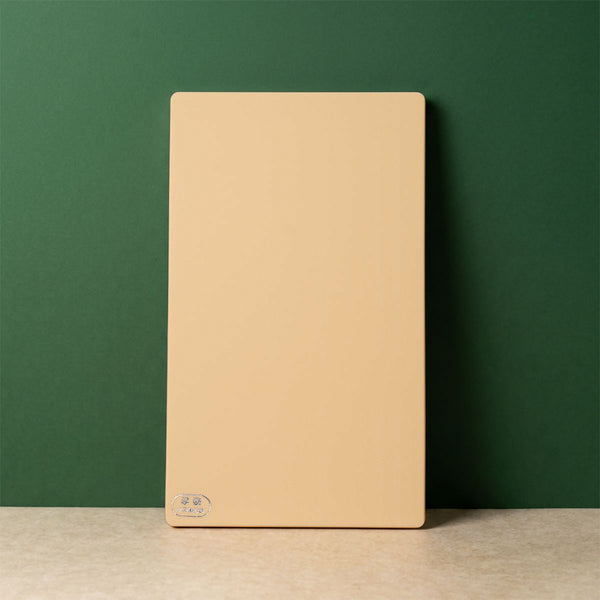
Asahi have been manufacturing synthetic cutting boards for Japanese knives for over 50 years. Over this span of time they have refined their products and now offer some of the best quality cutting boards in the world.
There are some great benefits to using a synthetic board:
- They are Antibacterial/Mould resistant. This is a huge advantage over wooden cutting boards that hold bacteria even after washing.
- Easy on knives. They have a wood-like texture and good feedback.
- They are scratch and wear resistant, and very tough. A test was completed after 50,000 cuts in a controlled environment, and the synthetic board had approximately 66% less wear depth.
- Stability. These boards are weighty, they don't slide around on the bench.
For full care instructions and product information please see the link below:
http://www.parker-asahi.co.jp/pdf/Elastic_Rubber_Chop_Board_en.pdf
Knife Information
Who doesn't want a whale knife? Hand-forged carbon steel with soft iron clad. A perfect utility/chopper with great edge retention.
STEEL BREAKDOWN – Blue Steel is a traditional high-carbon steel made by Hitachi Metals in Japan. It is the favourite steel of many knife makers and chefs across the world for its fantastic edge holding ability, toughness, and ease of sharpening. It contains few stainless elements, and as such will develop a patina, and develop rust spots if left wet after use. It requires a little more care and maintenance than something like VG-10 (Stainless Steel), so consider this when purchasing a Blue Steel knife as your first Japanese knife.
Specifications
| Style: | Utility |
| Edge Length: |
58mm |
165mm VG10 Core, Fluorine Resin Non Stick Coated Stainless Clad Bunka Knife.
Specifications
| Style: | Bunka |
| Blade Length: | 165mm |
| Weight: | 140grms |
| Blade Material: | VG10 Core, Fluorine Resin Non Stick Coated Stainless Clad |
| Handle Material: | Wenge/Buffalo Horn |
| HRC: | 60-61 |
Specifications
| Style: | Santoku |
| Blade Length: | 150mm |
| Weight: | 128g |
| Bevel: | Double Bevel |
| Spine Thickness @ Mid: | 2.9mm |
| Blade Material: | Blue 2 Core w/Iron Clad |
| Handle Material: | Walnut w/Plastic Ferrule |
| HRC: | 61 |
Chef's Edge
We pride ourselves on offering an unparalleled selection of Japanese knives. From the versatile Gyuto and the precise Santoku to specialized knives like the Nakiri and Yanagiba, each knife is handpicked for its quality and performance.