If you feel overwhelmed trying to decide on your first Japanese knife, you are not alone. The huge number of blade shapes, sizes, steel types, and finishes gets confusing fast. The good news: choosing your first knife is actually simple once you cut through the noise and focus on a few key things. Let's jump in.
Start with the blade shape
There are countless blade shapes in the Japanese knife world, but for your first knife you really only need to consider two or three.
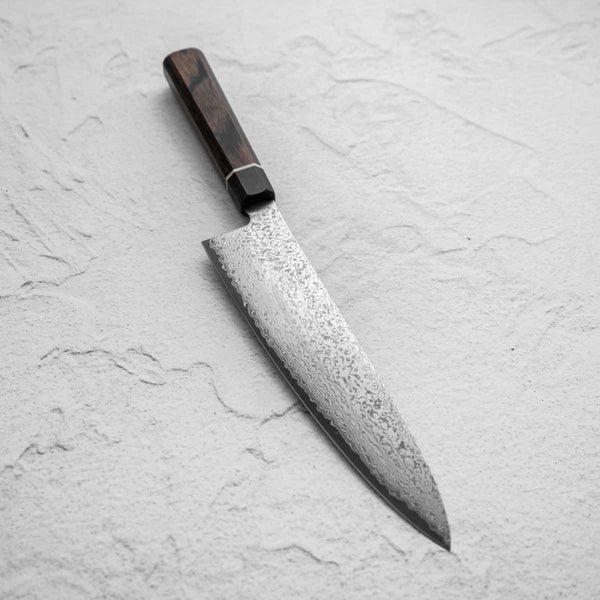
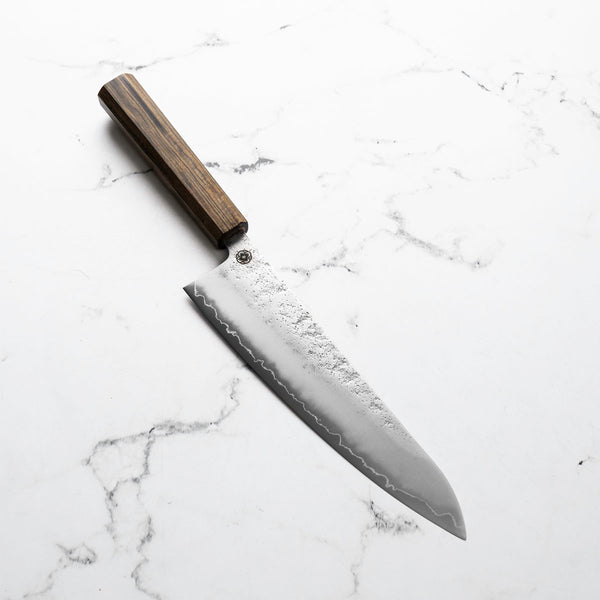
The first is the Gyuto. It is a general-purpose, double-bevel blade that handles any daily prep you throw at it, from small and large vegetables to medium cuts of protein like chicken breast or portioned beef. The 210mm edge length is the most common. Prefer something smaller? Go 180mm. Prefer a larger knife? Go 240mm.
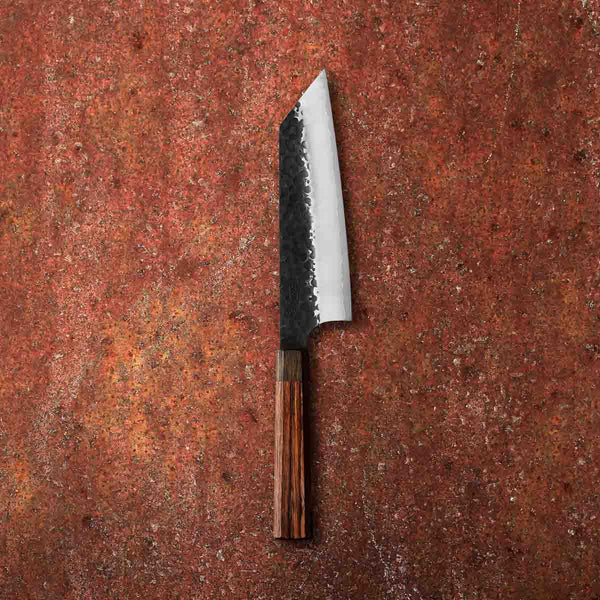
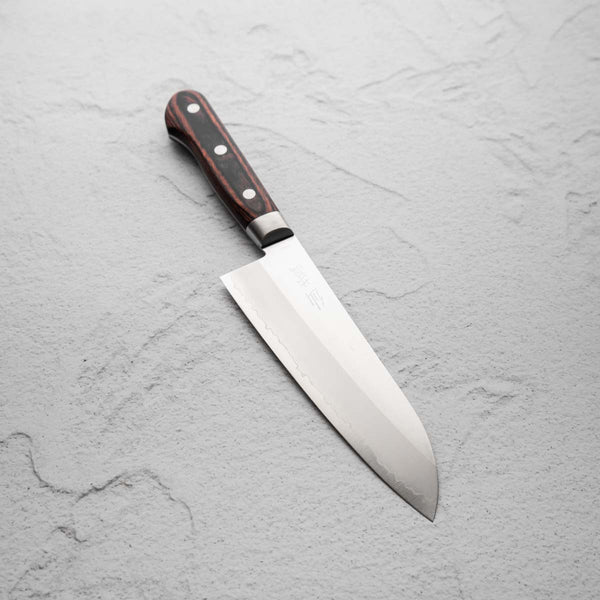
The second and third options are the Bunka and the Santoku. If you are not cutting larger vegetables or larger cuts of meat, these are ideal. They usually run between 160mm and 180mm and make a perfect smaller general-purpose blade. The Santoku has a rounded bullnose shape; the Bunka has a more aggressive k-tip for finer work.
Choose your steel
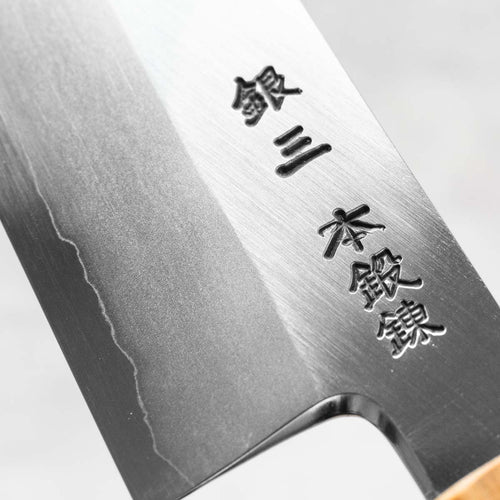
Japanese knife steels fall into two main groups: carbon and stainless, with some semi-stainless in between. Stainless is easier to care for and more resistant to corrosion. Carbon can develop rust spots even if left wet for a short time. For your first Japanese knife we always recommend stainless, as it is the easiest to care for. You still need to dry it after use, but it will not rust within minutes of being left wet like some carbon steel can.
There are four main Japanese stainless steels to pick from: AUS-8, VG-10, Ginsan, and SG-2. AUS-8 (and AUS-10) is the most beginner-friendly, budget-friendly option, SG-2 is the high-end premium choice, and Ginsan and VG-10 sit somewhere in between. As a rule of thumb, the harder the steel (its HRC rating), the more expensive it is to produce, and the longer it holds its edge. The budget-friendly options use a slightly softer steel, so they will not hold their edge as long.
Pick your finish
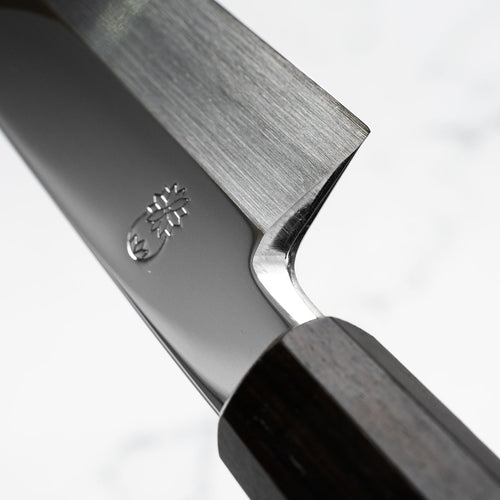
There are many finishes: Damascus layering, the Tsuchime hammered pattern, Kurouchi (the black finish), Migaki (polished), and Nishiji (textured). For most of these, the finish is purely aesthetic and does not affect cutting performance, so you are free to pick whichever you find most attractive.
That's it
Now you know you want a Gyuto, Bunka, or Santoku, in a stainless steel like AUS-8, VG-10, Ginsan, or SG-2. With that, you can confidently browse the range, find the best knife for you and your budget. If you have any other questions, reach out and we will be happy to help.